
Planeación didáctica por proyectos de tercer grado — Semana 9 de noviembre 2026: La vida en movimiento
 ChannelKids
Mira lo que los maestros ya crearon con Gamificación Educativa

Tu planeación, en un vistazo
Una ruta clara para llevar el proyecto «La vida en movimiento» al aula y adaptarlo a las necesidades de tu grupo.
Ver contexto pedagógico, adaptaciones y materiales
Esta planeación didáctica por proyectos está pensada para tercer grado, Fase 4, durante la semana 9 de noviembre del ciclo escolar 2026–2027. El proyecto «La vida en movimiento» tiene como propósito students will identify the purpose and main features of narration by reflecting orally and in writing on their learning throughout “Life in Motion.” They will communicate past and present experiences clearly and contribute to a written record of the group’s agreements about calculating the costs and benefits of conscious consumption. La secuencia parte del contexto del grupo para convertir sus experiencias, preguntas y saberes previos en oportunidades de aprendizaje significativo.
La propuesta se desarrolla mediante inquiry-based learning, following the textbook project’s reflection and agreement-writing sequence. y articula principalmente el campo formativo los campos formativos de la Nueva Escuela Mexicana. El contenido central aborda narration of past and present events. Los PDA describen estos aprendizajes: students identify the purpose of narration as a way to recount and communicate events from the past and present. Students recognize and use the main features of narration when describing what they learned, what surprised them, and how they could apply their knowledge. Students express their reflections orally and in writing with clarity and connect their participation and collaborative work to evidence from the project. Students record the group agreements reached about calculating the costs and benefits of conscious consumption. Las actividades se distribuyen por día con momentos de inicio, desarrollo y cierre, de modo que el docente pueda observar avances, recuperar producciones y ajustar la intervención sin perder el sentido del proyecto.
El producto final será written project reflections and group agreements on conscious consumption. La evaluación es formativa y considera participación, procesos, producciones y reflexión del alumnado. Se sugieren recursos como notebook, Community Projects textbook, page 116, Notebook, Community Projects textbook, page 116, Board. Para atender distintos ritmos de aprendizaje, ofrece apoyos visuales, consignas breves, opciones de respuesta oral o gráfica y acompañamiento entre pares. El documento puede descargarse en Word editable o en PDF listo para imprimir. Ambas versiones permiten adecuar tiempos, materiales, lenguaje, apoyos y evidencias a las necesidades reales de cada escuela.
Ficha curricular de la planeación
Consulta primero los elementos de la NEM. Después encontrarás la secuencia completa organizada por día.
Datos generales y propósito del proyecto
Ciclo escolar 2026–2027 · Fase 4.
Propósito: Students will identify the purpose and main features of narration by reflecting orally and in writing on their learning throughout “Life in Motion.” They will communicate past and present experiences clearly and contribute to a written record of the group’s agreements about calculating the costs and benefits of conscious consumption.
Metodología: Inquiry-based learning, following the textbook project’s reflection and agreement-writing sequence.
Contenido
Narration of past and present events.
Proceso de Desarrollo de Aprendizaje (PDA)
Students identify the purpose of narration as a way to recount and communicate events from the past and present. Students recognize and use the main features of narration when describing what they learned, what surprised them, and how they could apply their knowledge. Students express their reflections orally and in writing with clarity and connect their participation and collaborative work to evidence from the project. Students record the group agreements reached about calculating the costs and benefits of conscious consumption.
Ejes articuladores oficiales
Inclusión, Pensamiento crítico
Producto final
Written project reflections and group agreements on conscious consumption.
Evaluacion formativa
Ver criterios y evidencias
The student identifies narration as a way to recount and communicate a past or present event. The student writes a comprehensible reflection that includes a project experience and communicates its significance. The student explains an idea orally with clarity and listens respectfully to classmates’ accounts. The student supports reflections on participation and collaboration with a specific project-related reason. The student accurately records the group agreements about calculating the costs and benefits of conscious consumption.
Materiales
Ver lista completa
Notebook, Community Projects textbook, page 116, Notebook, Community Projects textbook, page 116, Board
Adaptaciones para el grupo
Para atender distintos ritmos de aprendizaje, ofrece apoyos visuales, consignas breves, opciones de respuesta oral o gráfica y acompañamiento entre pares.
Desarrollo completo de la planeación
Aquí comienza la organización diaria con inicio, desarrollo, cierre, recursos y evidencias. El contenido y el PDA ya están separados en la ficha anterior.
La vida en movimiento
Semana: Semana 9 — Noviembre
Languages
Metodología: Inquiry-based learning, following the textbook project’s reflection and agreement-writing sequence.
Propósito: Students will identify the purpose and main features of narration by reflecting orally and in writing on their learning throughout “Life in Motion.” They will communicate past and present experiences clearly and contribute to a written record of the group’s agreements about calculating the costs and benefits of conscious consumption.
Ejes articuladores
- Inclusión
- Pensamiento crítico
| Campo formativo | Contenido | PDA |
|---|---|---|
| Languages | Narration of past and present events. | Students identify the purpose of narration as a way to recount and communicate events from the past and present. Students recognize and use the main features of narration when describing what they learned, what surprised them, and how they could apply their knowledge. Students express their reflections orally and in writing with clarity and connect their participation and collaborative work to evidence from the project. Students record the group agreements reached about calculating the costs and benefits of conscious consumption. |
| Día | Secuencia de actividades | Recursos |
|---|---|---|
| Monday | Invite students to recall a moment from the “Life in Motion” inquiry that they can describe as an event from the past, and explain that narrating helps a speaker or writer communicate what happened and why it mattered. Read the reflection prompts on page 116 of the Community Projects textbook, then ask students to consider the sentence starter, “In this inquiry project, I learned…” before completing it individually in their notebooks. Guide them to include a clear event or discovery rather than a single isolated word, and invite a few volunteers to share their accounts aloud. Listen for whether each response identifies an experience and communicates its meaning; close by having students note one feature that made a classmate’s narration easy to understand. | Notebook, Community Projects textbook, page 116 |
| Tuesday | Use the prompt “I was surprised to discover that…” on page 116 to help students distinguish a narrated discovery from a general opinion. Ask them to reread their previous reflection and add details that clarify what they learned during the project and when the discovery occurred, while keeping the original meaning of the textbook prompt. Then organize pairs to read their accounts to one another and identify the event being narrated and the words that make its sequence understandable. Bring the class together to compare how narrators communicate past experiences, supporting students in revising unclear sentences without changing their ideas. Assess whether each account includes a comprehensible event and whether students can explain how the narration conveys their discovery. | Notebook, Community Projects textbook, page 116 |
| Wednesday | Turn attention to the textbook’s prompt, “I could apply my knowledge in…” on page 116, and ask students to connect a learning from “Life in Motion” with a possible future situation involving conscious consumption. Have each student complete the prompt in writing, then invite small groups to take turns presenting their responses orally; listeners should identify what knowledge the speaker would apply and in what situation. Support students in making the connection explicit through a complete account, while preserving their own examples and the project’s focus on calculating the costs and benefits of conscious consumption. Conclude with a brief reflection on how narration can communicate both a past learning experience and a future application, noting clarity, sequence, and attentive listening. | Notebook, Community Projects textbook, page 116 |
| Thursday | Present the reflection prompts about individual participation and classmates’ collaborative work on page 116, explaining that students will use them to recount how the group carried out the inquiry. Ask each student to complete the corresponding sentence starters in the textbook, including a reason that supports each judgment, and then form pairs for a respectful exchange of reflections. Encourage speakers to refer to a specific contribution or shared activity from the project rather than make unsupported general claims; partners may ask, “What happened that helped you reach that conclusion?” Gather several examples and discuss how details and reasons strengthen a narration. Formatively review whether students communicate a clear experience, support their ideas, and acknowledge collaborative participation. | Notebook, Community Projects textbook, page 116 |
| Friday | Bring the week’s reflections together by returning to page 116, where the textbook asks students to write in their notebooks the group agreements reached about calculating the costs and benefits of conscious consumption. Facilitate an in-class discussion in which students recall the agreements from the project, state them clearly, and distinguish the agreed decisions from personal reflections; record the group’s wording where everyone can review it before copying it into notebooks. Invite students to read one agreement aloud and explain how it relates to the project, then revisit their earlier narratives to identify how they communicated a past learning and a possible application. Close by assessing the accuracy of the recorded agreements, the clarity of oral explanations, and students’ recognition of narration’s purpose and features. | Notebook, Community Projects textbook, page 116, Board |
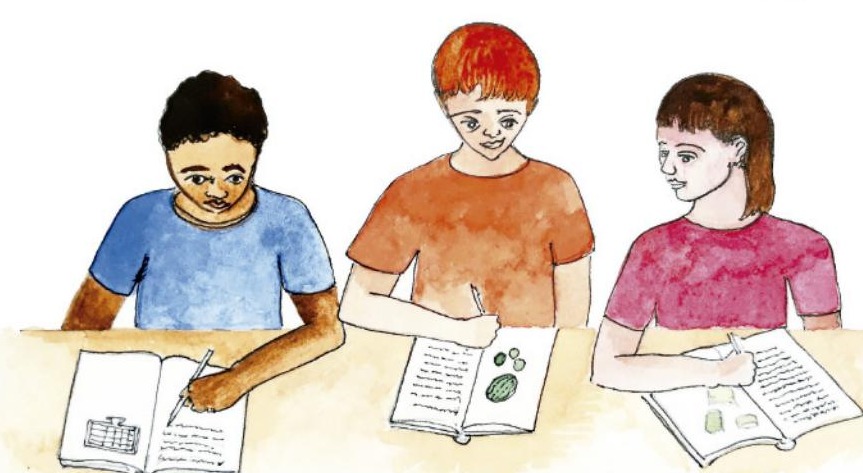
Producto: Written project reflections and group agreements on conscious consumption.
Instrumento de evaluación de contenidos, PDA y producto del proyecto:
| Criterios de evaluación | Logrado | En proceso | Falta por consolidar |
|---|---|---|---|
| The student identifies narration as a way to recount and communicate a past or present event | |||
| The student writes a comprehensible reflection that includes a project experience and communicates its significance | |||
| The student explains an idea orally with clarity and listens respectfully to classmates’ accounts | |||
| The student supports reflections on participation and collaboration with a specific project-related reason | |||
| The student accurately records the group agreements about calculating the costs and benefits of conscious consumption |
Antes de descargar
Datos, propósito y contenidos
- Students will identify the purpose and main features of narration by reflecting orally and in writing on their learning through?
- Narration of past and present events.
Actividades, producto y evaluación
- Notebook, Community Projects textbook, page 116, Notebook, Community Projects textbook, page 116, Board
- Written project reflections and group agreements on conscious consumption.
Tu material está listo para descargar
Elige Word, PDF o anexos desde un solo lugar.
Mira lo que los maestros ya crearon con Gamificación Educativa
Preguntas frecuentes sobre esta planeación
¿Para qué grado y semanas está diseñada esta planeación?
Está diseñada para tercer grado, la semana 9 de noviembre de 2026, dentro del ciclo escolar 2026–2027.
¿Qué metodología utiliza la planeación?
La secuencia utiliza inquiry-based learning, following the textbook project’s reflection and agreement-writing sequence. y organiza actividades situadas con evidencias y un producto final.
¿La planeación incluye contenidos y PDA de la NEM?
Sí. Incluye el campo formativo, el contenido, el proceso de desarrollo de aprendizaje, actividades y evaluación formativa alineados con la NEM.
¿Puedo editar y adaptar el archivo?
Sí. La versión Word es editable para ajustar actividades, materiales, apoyos, tiempos y evidencias. El PDF está listo para imprimir.
