
Planeación didáctica por proyectos de tercer grado — Semana 9 de noviembre 2026: Clasificamos, reducimos y reutilizamos
 ChannelKids
Mira lo que los maestros ya crearon con Gamificación Educativa

Tu planeación, en un vistazo
Una ruta clara para llevar el proyecto «Clasificamos, reducimos y reutilizamos» al aula y adaptarlo a las necesidades de tu grupo.
Ver contexto pedagógico, adaptaciones y materiales
Esta planeación didáctica por proyectos está pensada para tercer grado, Fase 4, durante la semana 9 de noviembre del ciclo escolar 2026–2027. El proyecto «Clasificamos, reducimos y reutilizamos» tiene como propósito develop students’ oral, written, and creative expression by using the textbook project to examine responsible consumption and the classification, reduction, and reuse of waste. Students will communicate information through discussion, written accounts, an informative poster, and a reuse proposal. La secuencia parte del contexto del grupo para convertir sus experiencias, preguntas y saberes previos en oportunidades de aprendizaje significativo.
La propuesta se desarrolla mediante service-learning, organized around identifying a classroom need, preparing an informative campaign, and sharing and reflecting on its message within the classroom setting. y articula principalmente el campo formativo los campos formativos de la Nueva Escuela Mexicana. El contenido central aborda narration of past and present events. Los PDA describen estos aprendizajes: students identify and understand the purpose and main characteristics of narration by examining and discussing the present-day waste-related situations described in the textbook. Students narrate and communicate information about waste, responsible consumption, and their proposed reuse object or organic-waste use through clear oral contributions and written texts. Las actividades se distribuyen por día con momentos de inicio, desarrollo y cierre, de modo que el docente pueda observar avances, recuperar producciones y ajustar la intervención sin perder el sentido del proyecto.
El producto final será classroom informative campaign with a reuse proposal and written information card. La evaluación es formativa y considera participación, procesos, producciones y reflexión del alumnado. Se sugieren recursos como notebook, Textbook, page 248, Notebook, Textbook, pages 251–252, Notebook, Textbook, pages 253–254, Notebook, Textbook, pages 255–258, Notebook, Textbook, pages 259–265, Reused plastic bottle or another proposed reusable material, Classroom display space. Para atender distintos ritmos de aprendizaje, ofrece apoyos visuales, consignas breves, opciones de respuesta oral o gráfica y acompañamiento entre pares. El documento puede descargarse en Word editable o en PDF listo para imprimir. Ambas versiones permiten adecuar tiempos, materiales, lenguaje, apoyos y evidencias a las necesidades reales de cada escuela.
Ficha curricular de la planeación
Consulta primero los elementos de la NEM. Después encontrarás la secuencia completa organizada por día.
Datos generales y propósito del proyecto
Ciclo escolar 2026–2027 · Fase 4.
Propósito: Develop students’ oral, written, and creative expression by using the textbook project to examine responsible consumption and the classification, reduction, and reuse of waste. Students will communicate information through discussion, written accounts, an informative poster, and a reuse proposal.
Metodología: Service-learning, organized around identifying a classroom need, preparing an informative campaign, and sharing and reflecting on its message within the classroom setting.
Contenido
Narration of past and present events.
Proceso de Desarrollo de Aprendizaje (PDA)
Students identify and understand the purpose and main characteristics of narration by examining and discussing the present-day waste-related situations described in the textbook. Students narrate and communicate information about waste, responsible consumption, and their proposed reuse object or organic-waste use through clear oral contributions and written texts.
Ejes articuladores oficiales
Inclusión, Pensamiento crítico
Producto final
Classroom informative campaign with a reuse proposal and written information card.
Evaluacion formativa
Ver criterios y evidencias
Students identify the event, problem, and relevant details in the textbook’s present-day accounts of waste. Students produce a coherent written account that connects a waste-related situation with its consequences or a responsible action. Students contribute orally using clear, relevant explanations and listen respectfully to classmates’ ideas. Students communicate the purpose and use of a reuse proposal through an understandable description or set of instructions. Students create campaign content that accurately promotes classifying, reducing, and reusing waste and responsible consumption.
Materiales
Ver lista completa
Notebook, Textbook, page 248, Notebook, Textbook, pages 251–252, Notebook, Textbook, pages 253–254, Notebook, Textbook, pages 255–258, Notebook, Textbook, pages 259–265, Reused plastic bottle or another proposed reusable material, Classroom display space
Adaptaciones para el grupo
Para atender distintos ritmos de aprendizaje, ofrece apoyos visuales, consignas breves, opciones de respuesta oral o gráfica y acompañamiento entre pares.
Desarrollo completo de la planeación
Aquí comienza la organización diaria con inicio, desarrollo, cierre, recursos y evidencias. El contenido y el PDA ya están separados en la ficha anterior.
Clasificamos, reducimos y reutilizamos
Semana: Semana 9 — Noviembre
Languages
Metodología: Service-learning, organized around identifying a classroom need, preparing an informative campaign, and sharing and reflecting on its message within the classroom setting.
Propósito: Develop students’ oral, written, and creative expression by using the textbook project to examine responsible consumption and the classification, reduction, and reuse of waste. Students will communicate information through discussion, written accounts, an informative poster, and a reuse proposal.
Ejes articuladores
- Inclusión
- Pensamiento crítico
| Campo formativo | Contenido | PDA |
|---|---|---|
| Languages | Narration of past and present events. | Students identify and understand the purpose and main characteristics of narration by examining and discussing the present-day waste-related situations described in the textbook. Students narrate and communicate information about waste, responsible consumption, and their proposed reuse object or organic-waste use through clear oral contributions and written texts. |
| Día | Secuencia de actividades | Recursos |
|---|---|---|
| Monday | Present the project by inviting students to observe the images on page 248 and describe what is happening in each one, distinguishing details they can see from ideas they infer. Connect their observations to waste-related situations they recognize within their classroom community, without extending the activity beyond the classroom. Then have students write in their notebooks what problem each image presents and share their accounts in small groups, listening for words that establish when or where an event occurs and what happened. Use the discussion to clarify that a narration communicates events in an organized way and can describe situations occurring in the present. Close by gathering examples of clear, respectful oral descriptions and checking whether each written account identifies a problem shown in the source images. | Notebook, Textbook, page 248 |
| Tuesday | Use the news report on pages 251–252 to guide students in tracing how waste accumulation affects the places described and the people who live there. Read the report aloud in sections, pausing for students to identify the municipalities, the difficulties reported, and the consequences presented; then ask them to answer the textbook questions in their notebooks and explain how the report narrates current events. In pairs, have students compare their written responses and revise any statement that confuses a reported fact with a proposed solution. Bring the class together to discuss the benefits of reducing and reusing waste, assessing whether students support their explanations with details from the reading and communicate them in complete, understandable sentences. | Notebook, Textbook, pages 251–252 |
| Wednesday | Invite students to examine the classroom itself as they identify organic and inorganic waste, following the textbook activity on pages 253–254. In small groups, have them complete the table by recording each waste item found and a possible use for it, then compare their entries and agree on realistic ways to reduce the waste generated in the classroom. Ask each group to report how it reached its conclusions, encouraging students to sequence their explanation with clear references to what they observed and what they propose. Conclude by revisiting the difference between describing an observed situation and narrating the steps that led to a proposal; provide formative feedback on accurate vocabulary, listening, and the clarity of each group’s oral account. | Notebook, Textbook, pages 253–254 |
| Thursday | Build the campaign’s informative purpose by returning to the textbook research and reflection activities on pages 255–258, selecting the questions about waste accumulation, its consequences, responsible consumption, and the benefits of classifying, reducing, and reusing waste. Keep the work within the classroom: students can use the provided textbook information and their earlier notes to prepare a brief written account that links a problem, its consequences, and a responsible action. Next, organize a discussion in which classmates ask for clarification and identify which details make the account informative and easy to follow. Close by compiling the class’s campaign ideas and checking that students distinguish information about a present problem from recommendations for changing habits. | Notebook, Textbook, pages 255–258 |
| Friday | Move from planning to creative communication with the campaign activities on pages 259–265, keeping the presentation and audience within the classroom as required by the classroom setting. Have students use the textbook’s poster-planning responsibilities to select a campaign topic and phrase, then follow the reuse-object directions on page 261 or develop the reuse proposal considered on pages 262–263; students should write a clear description or instructions and complete the information card fields provided in the book. Arrange a classroom display of the posters and objects, invite classmates in the group to share responses, and record their suggestions about responsible consumption and waste reduction. Finish with the reflection on page 265, assessing the clarity of students’ written and spoken messages, their use of relevant details, and their ability to explain what the campaign means to them. | Notebook, Textbook, pages 259–265, Reused plastic bottle or another proposed reusable material, Classroom display space |
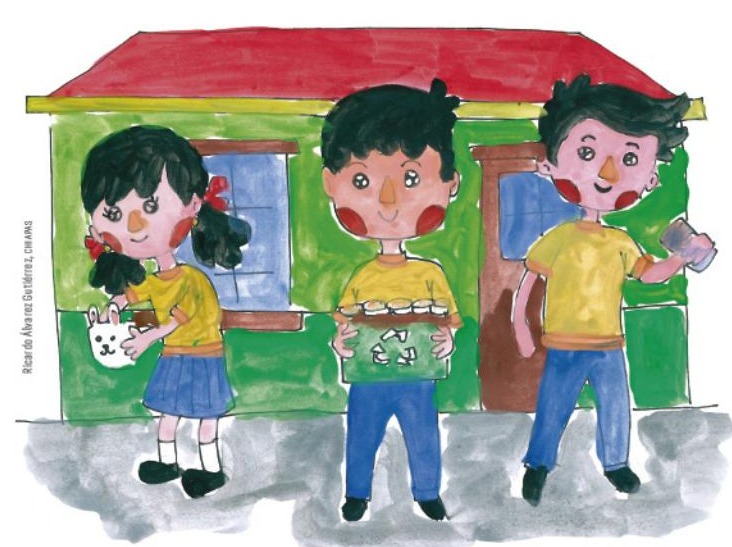
Producto: Classroom informative campaign with a reuse proposal and written information card.
Instrumento de evaluación de contenidos, PDA y producto del proyecto:
| Criterios de evaluación | Logrado | En proceso | Falta por consolidar |
|---|---|---|---|
| Students identify the event, problem, and relevant details in the textbook’s present-day accounts of waste | |||
| Students produce a coherent written account that connects a waste-related situation with its consequences or a responsible action | |||
| Students contribute orally using clear, relevant explanations and listen respectfully to classmates’ ideas | |||
| Students communicate the purpose and use of a reuse proposal through an understandable description or set of instructions | |||
| Students create campaign content that accurately promotes classifying, reducing, and reusing waste and responsible consumption |
Antes de descargar
Datos, propósito y contenidos
- Develop students’ oral, written, and creative expression by using the textbook project to examine responsible consumption and t?
- Narration of past and present events.
Actividades, producto y evaluación
- Notebook, Textbook, page 248, Notebook, Textbook, pages 251–252, Notebook, Textbook, pages 253–254, Notebook, Textbook, pages 2?
- Classroom informative campaign with a reuse proposal and written information card.
Tu material está listo para descargar
Elige Word, PDF o anexos desde un solo lugar.
Mira lo que los maestros ya crearon con Gamificación Educativa
Preguntas frecuentes sobre esta planeación
¿Para qué grado y semanas está diseñada esta planeación?
Está diseñada para tercer grado, la semana 9 de noviembre de 2026, dentro del ciclo escolar 2026–2027.
¿Qué metodología utiliza la planeación?
La secuencia utiliza service-learning, organized around identifying a classroom need, preparing an informative campaign, and sharing and reflecting on its message within the classroom setting. y organiza actividades situadas con evidencias y un producto final.
¿La planeación incluye contenidos y PDA de la NEM?
Sí. Incluye el campo formativo, el contenido, el proceso de desarrollo de aprendizaje, actividades y evaluación formativa alineados con la NEM.
¿Puedo editar y adaptar el archivo?
Sí. La versión Word es editable para ajustar actividades, materiales, apoyos, tiempos y evidencias. El PDF está listo para imprimir.
