
Planeación didáctica por proyectos de segundo grado — Semana 12 de noviembre 2026: Cuidado de las mascotas
 ChannelKids
Mira lo que los maestros ya crearon con Hoja de Trabajo Infantil

Tu planeación, en un vistazo
Una ruta clara para llevar el proyecto «Cuidado de las mascotas» al aula y adaptarlo a las necesidades de tu grupo.
Ver contexto pedagógico, adaptaciones y materiales
Esta planeación didáctica por proyectos está pensada para segundo grado, Fase 3, durante la semana 12 de noviembre del ciclo escolar 2026–2027. El proyecto «Cuidado de las mascotas» tiene como propósito students will communicate information about responsible pet care through oral discussion, guided research, and the creation of an illustrated informational brochure. They will write their own names and surnames to identify authorship and connect their writing to their identity. La secuencia parte del contexto del grupo para convertir sus experiencias, preguntas y saberes previos en oportunidades de aprendizaje significativo.
La propuesta se desarrolla mediante project-based learning, organized around the textbook project and completed within the classroom. y articula principalmente el campo formativo los campos formativos de la Nueva Escuela Mexicana. El contenido central aborda writing names in the home language. Los PDA describen estos aprendizajes: students write their first and last names and those of family members, teachers, peers, and other people in their surroundings to indicate authorship, belonging, and identity. Students write their own first and last names on the informational brochure to identify themselves as its authors. Las actividades se distribuyen por día con momentos de inicio, desarrollo y cierre, de modo que el docente pueda observar avances, recuperar producciones y ajustar la intervención sin perder el sentido del proyecto.
El producto final será illustrated informational pet-care brochure with student authorship identification. La evaluación es formativa y considera participación, procesos, producciones y reflexión del alumnado. Se sugieren recursos como notebook, Textbook, page 179, Pencils, Notebook, Textbook, page 180, Classroom reference books, Pencils, Notebook, Textbook, pages 181–183, Pencils, Board, Markers, Textbook, pages 183–184, White paper, Pencils, Colored pencils, Classroom reference material, Textbook, page 185, White paper, Pencils, Colored pencils, Completed notebooks. Para atender distintos ritmos de aprendizaje, ofrece apoyos visuales, consignas breves, opciones de respuesta oral o gráfica y acompañamiento entre pares. El documento puede descargarse en Word editable o en PDF listo para imprimir. Ambas versiones permiten adecuar tiempos, materiales, lenguaje, apoyos y evidencias a las necesidades reales de cada escuela.
Ficha curricular de la planeación
Consulta primero los elementos de la NEM. Después encontrarás la secuencia completa organizada por día.
Datos generales y propósito del proyecto
Ciclo escolar 2026–2027 · Fase 3.
Propósito: Students will communicate information about responsible pet care through oral discussion, guided research, and the creation of an illustrated informational brochure. They will write their own names and surnames to identify authorship and connect their writing to their identity.
Metodología: Project-Based Learning, organized around the textbook project and completed within the classroom.
Contenido
Writing names in the home language.
Proceso de Desarrollo de Aprendizaje (PDA)
Students write their first and last names and those of family members, teachers, peers, and other people in their surroundings to indicate authorship, belonging, and identity. Students write their own first and last names on the informational brochure to identify themselves as its authors.
Ejes articuladores oficiales
Inclusión, Pensamiento crítico
Producto final
Illustrated informational pet-care brochure with student authorship identification.
Evaluacion formativa
Ver criterios y evidencias
The student writes their first and last names legibly on the brochure to identify authorship. The student contributes an oral idea about pet care or responsibility that is relevant to the textbook project. The student records information and questionnaire content that matches the project directions and is understandable to a reader. The student uses drawings and written text to communicate the brochure’s message about responsible pet care.
Materiales
Ver lista completa
Notebook, Textbook, page 179, Pencils, Notebook, Textbook, page 180, Classroom reference books, Pencils, Notebook, Textbook, pages 181–183, Pencils, Board, Markers, Textbook, pages 183–184, White paper, Pencils, Colored pencils, Classroom reference material, Textbook, page 185, White paper, Pencils, Colored pencils, Completed notebooks
Adaptaciones para el grupo
Para atender distintos ritmos de aprendizaje, ofrece apoyos visuales, consignas breves, opciones de respuesta oral o gráfica y acompañamiento entre pares.
Desarrollo completo de la planeación
Aquí comienza la organización diaria con inicio, desarrollo, cierre, recursos y evidencias. El contenido y el PDA ya están separados en la ficha anterior.
Cuidado de las mascotas
Semana: Semana 12 — Noviembre
Languages
Metodología: Project-Based Learning, organized around the textbook project and completed within the classroom.
Propósito: Students will communicate information about responsible pet care through oral discussion, guided research, and the creation of an illustrated informational brochure. They will write their own names and surnames to identify authorship and connect their writing to their identity.
Ejes articuladores
- Inclusión
- Pensamiento crítico
| Campo formativo | Contenido | PDA |
|---|---|---|
| Languages | Writing names in the home language. | Students write their first and last names and those of family members, teachers, peers, and other people in their surroundings to indicate authorship, belonging, and identity. Students write their own first and last names on the informational brochure to identify themselves as its authors. |
| Día | Secuencia de actividades | Recursos |
|---|---|---|
| Monday | Present the project by inviting students to consider what a person should know before welcoming a pet into a home, and connect their responses to the need to communicate responsible care clearly. Read and discuss the text and accompanying information on animal abandonment in the textbook (p. 179), then guide a classroom conversation about why animals may be mistreated or abandoned. Ask students to express one idea aloud and listen respectfully to differing views, noting how clear speaking helps others understand the issue. To conclude, have students record their names and surnames beside a brief written response in their notebooks, observing whether each child uses the name to identify authorship. | Notebook, Textbook, page 179, Pencils |
| Tuesday | Invite the class to examine what responsible pet ownership requires by revisiting the questions and information-gathering prompts in the textbook (p. 180). In small groups, have students consult available classroom references and, with teacher guidance, record information about pets’ care needs, owners’ responsibilities, and common reasons for abandonment; keep research within the classroom and use the book’s suggested questions to organize findings. Then ask each group to share one verified idea orally and help students distinguish a clear statement from an unsupported guess. Have students write their names and surnames on their group notes so the authorship of each contribution is identifiable, and provide feedback on legibility and accurate name writing. | Notebook, Textbook, page 180, Classroom reference books, Pencils |
| Wednesday | Use the story of Belén in the textbook (pp. 181–182) to focus students on the difference between enjoying a pet and meeting its ongoing needs. Read the narrative aloud, pausing to invite predictions and then asking how Belén’s understanding changes after learning why animals are at the adoption center. Organize a discussion in which students support their opinions with details from the story and explain how an informational message could help people make a responsible decision. Next, guide the class in composing the five yes-or-no questions specified in the textbook (p. 183), keeping each question understandable and relevant to readiness for pet ownership. Students copy the agreed questions into their notebooks and add their first and last names as authors. | Notebook, Textbook, pages 181–183, Pencils, Board, Markers |
| Thursday | Direct students’ attention to the information needed for the brochure by reviewing the responsible-adoption place record in the textbook (p. 183), including its name, location, contact details, and types of pets available for adoption. Use teacher-provided classroom reference material to help the class complete a reliable sample record, and discuss how accurate details make written information useful to readers. Then demonstrate the two folds that divide a sheet into three panels and six faces, following the textbook directions (p. 184). Students begin their brochures on white paper, write the title and brief care information on the designated faces, and check that their writing is readable. Before storing the work, each student writes a first and last name to mark authorship. | Textbook, pages 183–184, White paper, Pencils, Colored pencils, Classroom reference material |
| Friday | Set aside time for students to complete the six brochure faces according to the textbook directions (p. 185): the title, concise care and responsibility information, the class questionnaire and its message, adoption-place information, and an author identification with grade, group, and a pet-care phrase. Encourage students to add drawings that clarify and decorate their message, then invite partners to review whether the information is understandable and whether the author’s first and last name are clearly written. Have students present one part of their brochure orally and reflect on how their writing may help readers consider pet-care responsibilities. Close by collecting the finished classroom products and recording observations about name writing, clarity, and participation. | Textbook, page 185, White paper, Pencils, Colored pencils, Completed notebooks |
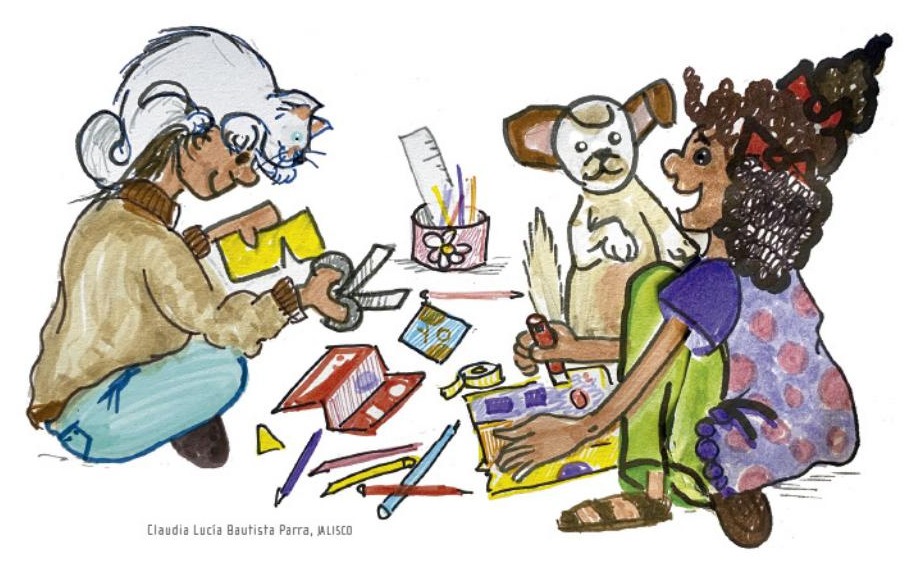
Producto: Illustrated informational pet-care brochure with student authorship identification.
Instrumento de evaluación de contenidos, PDA y producto del proyecto:
| Criterios de evaluación | Logrado | En proceso | Falta por consolidar |
|---|---|---|---|
| The student writes their first and last names legibly on the brochure to identify authorship | |||
| The student contributes an oral idea about pet care or responsibility that is relevant to the textbook project | |||
| The student records information and questionnaire content that matches the project directions and is understandable to a reader | |||
| The student uses drawings and written text to communicate the brochure’s message about responsible pet care |
Antes de descargar
Datos, propósito y contenidos
- Students will communicate information about responsible pet care through oral discussion, guided research, and the creation of ?
- Writing names in the home language.
Actividades, producto y evaluación
- Notebook, Textbook, page 179, Pencils, Notebook, Textbook, page 180, Classroom reference books, Pencils, Notebook, Textbook, pa?
- Illustrated informational pet-care brochure with student authorship identification.
Tu material está listo para descargar
Elige Word, PDF o anexos desde un solo lugar.
Mira lo que los maestros ya crearon con Hoja de Trabajo Infantil
Preguntas frecuentes sobre esta planeación
¿Para qué grado y semanas está diseñada esta planeación?
Está diseñada para segundo grado, la semana 12 de noviembre de 2026, dentro del ciclo escolar 2026–2027.
¿Qué metodología utiliza la planeación?
La secuencia utiliza project-based learning, organized around the textbook project and completed within the classroom. y organiza actividades situadas con evidencias y un producto final.
¿La planeación incluye contenidos y PDA de la NEM?
Sí. Incluye el campo formativo, el contenido, el proceso de desarrollo de aprendizaje, actividades y evaluación formativa alineados con la NEM.
¿Puedo editar y adaptar el archivo?
Sí. La versión Word es editable para ajustar actividades, materiales, apoyos, tiempos y evidencias. El PDF está listo para imprimir.
