
Planeación didáctica por proyectos de segundo grado — Semana 12 de noviembre 2026: Cantando ando
 ChannelKids
Mira lo que los maestros ya crearon con Gamificación Educativa

Tu planeación, en un vistazo
Una ruta clara para llevar el proyecto «Cantando ando» al aula y adaptarlo a las necesidades de tu grupo.
Ver contexto pedagógico, adaptaciones y materiales
Esta planeación didáctica por proyectos está pensada para segundo grado, Fase 3, durante la semana 12 de noviembre del ciclo escolar 2026–2027. El proyecto «Cantando ando» tiene como propósito students will create and revise an original song that communicates personal experiences and emotions, then contribute it to a class songbook. They will identify their authorship by writing their first and last names on their song and take part in sharing and reflecting on the completed work within the classroom. La secuencia parte del contexto del grupo para convertir sus experiencias, preguntas y saberes previos en oportunidades de aprendizaje significativo.
La propuesta se desarrolla mediante project-based learning, following the planning, creation, revision, compilation, presentation, and reflection sequence of the official classroom project. y articula principalmente el campo formativo los campos formativos de la Nueva Escuela Mexicana. El contenido central aborda writing names in the mother tongue. Los PDA describen estos aprendizajes: students write their first and last names, and the names of family members, teachers, peers, and other people in their environment, to indicate authorship, belonging, and identity. Students identify their original song by writing their first and last names as its authors, and recognize how names communicate authorship and belonging within the class songbook. Las actividades se distribuyen por día con momentos de inicio, desarrollo y cierre, de modo que el docente pueda observar avances, recuperar producciones y ajustar la intervención sin perder el sentido del proyecto.
El producto final será class songbook with individually authored songs. La evaluación es formativa y considera participación, procesos, producciones y reflexión del alumnado. Se sugieren recursos como notebook, Official textbook, pp. 94–96, Board and markers, Notebook, Official textbook, pp. 97–98, Board and markers, Notebook, Official textbook, pp. 99–100, Pencils, Notebook, Official textbook, pp. 101–102, Pencils, Official textbook, pp. 103–107, White sheets, Cardboard, Ruler, Blue and red markers, Hole punch, Rubber band, Colored pencils or crayons, Decorative drawing materials. Para atender distintos ritmos de aprendizaje, ofrece apoyos visuales, consignas breves, opciones de respuesta oral o gráfica y acompañamiento entre pares. El documento puede descargarse en Word editable o en PDF listo para imprimir. Ambas versiones permiten adecuar tiempos, materiales, lenguaje, apoyos y evidencias a las necesidades reales de cada escuela.
Ficha curricular de la planeación
Consulta primero los elementos de la NEM. Después encontrarás la secuencia completa organizada por día.
Datos generales y propósito del proyecto
Ciclo escolar 2026–2027 · Fase 3.
Propósito: Students will create and revise an original song that communicates personal experiences and emotions, then contribute it to a class songbook. They will identify their authorship by writing their first and last names on their song and take part in sharing and reflecting on the completed work within the classroom.
Metodología: Project-Based Learning, following the planning, creation, revision, compilation, presentation, and reflection sequence of the official classroom project.
Contenido
Writing names in the mother tongue.
Proceso de Desarrollo de Aprendizaje (PDA)
Students write their first and last names, and the names of family members, teachers, peers, and other people in their environment, to indicate authorship, belonging, and identity. Students identify their original song by writing their first and last names as its authors, and recognize how names communicate authorship and belonging within the class songbook.
Ejes articuladores oficiales
Inclusión, Pensamiento crítico
Producto final
Class songbook with individually authored songs
Evaluacion formativa
Ver criterios y evidencias
Each student writes their first and last names legibly on their original song to identify authorship. Each song includes a title and communicates an experience or emotion through its lyrics. Each student uses peer and teacher feedback to revise the song while retaining clear author identification. The class songbook includes the students’ contributions arranged and assembled according to the agreed plan. Students participate respectfully in presenting the songbook and reflect on how names indicate authorship and belonging.
Materiales
Ver lista completa
Notebook, Official textbook, pp. 94–96, Board and markers, Notebook, Official textbook, pp. 97–98, Board and markers, Notebook, Official textbook, pp. 99–100, Pencils, Notebook, Official textbook, pp. 101–102, Pencils, Official textbook, pp. 103–107, White sheets, Cardboard, Ruler, Blue and red markers, Hole punch, Rubber band, Colored pencils or crayons, Decorative drawing materials
Adaptaciones para el grupo
Para atender distintos ritmos de aprendizaje, ofrece apoyos visuales, consignas breves, opciones de respuesta oral o gráfica y acompañamiento entre pares.
Desarrollo completo de la planeación
Aquí comienza la organización diaria con inicio, desarrollo, cierre, recursos y evidencias. El contenido y el PDA ya están separados en la ficha anterior.
Cantando ando
Semana: Semana 12 — Noviembre
Languages
Metodología: Project-Based Learning, following the planning, creation, revision, compilation, presentation, and reflection sequence of the official classroom project.
Propósito: Students will create and revise an original song that communicates personal experiences and emotions, then contribute it to a class songbook. They will identify their authorship by writing their first and last names on their song and take part in sharing and reflecting on the completed work within the classroom.
Ejes articuladores
- Inclusión
- Pensamiento crítico
| Campo formativo | Contenido | PDA |
|---|---|---|
| Languages | Writing names in the mother tongue. | Students write their first and last names, and the names of family members, teachers, peers, and other people in their environment, to indicate authorship, belonging, and identity. Students identify their original song by writing their first and last names as its authors, and recognize how names communicate authorship and belonging within the class songbook. |
| Día | Secuencia de actividades | Recursos |
|---|---|---|
| Monday | Present the classroom situation in the project: Marisol and her classmates could not find a songbook in Paula’s Library, and invite students to consider why a classroom songbook would be useful and how they could create one together (pp. 94–95). Guide a whole-class discussion about how songs express emotions and experiences, then have students complete the project’s recovery questions in their notebooks: what is needed to make a songbook, how a song might be created, and what emotions it can express (p. 96). As students share, draw attention to the way a written first and last name identifies the author of an original song; record students’ ideas and check whether they can explain how their contribution will be identified in the class collection. | Notebook, Official textbook, pp. 94–96, Board and markers |
| Tuesday | Invite students to examine the project schedule and agree as a class on the time needed to draft, revise, organize, and present their songs, following the planning table in the book (p. 97). Continue by guiding a search for song examples and a discussion of verse, stanza, rhyme, and other song elements; use the book’s suggested examples as the basis for listening, reading, and selecting a song the class finds meaningful (p. 98). Have students record the chosen example and their own first and last names in their notebooks, modeling clear letter formation and correct name order. Conclude by asking students to explain how a song’s words or sound can communicate a feeling, and observe their participation and ability to write their names legibly as authors in preparation for the original song. | Notebook, Official textbook, pp. 97–98, Board and markers |
| Wednesday | Use the selected song to lead a classroom reading or singing, inviting students to invent simple movements that respond to its rhythm while remaining attentive to the lyrics and feelings it conveys (p. 99). Then facilitate a brief sharing of personal adventures and the emotions students recall, as directed in the project, and have each student record an experience and its associated feelings in a notebook (p. 99). Guide students to gather useful words, identify rhyming sounds, and compose at least three stanzas before combining them into a first song draft (p. 100). Ask each student to add a title and first and last name to the draft, explaining that the name marks authorship; assess whether the draft connects an experience with an emotion and whether the author’s name is readable. | Notebook, Official textbook, pp. 99–100, Pencils |
| Thursday | Arrange students in small classroom groups to exchange first drafts and read one another’s songs respectfully, following the peer review sequence in the book (pp. 101–102). Prompt listeners to offer specific, supportive suggestions about the lyrics and to identify the experience or emotion they understand from each song; have authors consider the feedback and prepare a second draft, checking how the verses sound when read or sung aloud. Students should preserve their title and first and last names so that authorship remains clear as the song changes. Invite each writer to explain why the title fits and which revision improved the song’s meaning, while monitoring respectful listening, legible name writing, and the connection between the lyrics and the author’s intended emotion. | Notebook, Official textbook, pp. 101–102, Pencils |
| Friday | Guide students in sharing their revised songs and identifying the feelings each one evokes, then record song titles and listeners’ responses in the project table and group songs according to the emotions they express (p. 103). Support the class as it copies each final song onto a white sheet, makes a cover, arranges the pages, and assembles and decorates the songbook using the book’s directions (pp. 104–105). Have students verify that every contribution includes its title and the author’s first and last names. Organize a classroom presentation and rehearsal in which students introduce the songbook and sing or present selected songs, then invite reflection on what they learned about expressing experiences and emotions and how their names show authorship; conclude by placing the completed songbook in an appropriate classroom location, as proposed in the project (pp. 105–107). | Official textbook, pp. 103–107, White sheets, Cardboard, Ruler, Blue and red markers, Hole punch, Rubber band, Colored pencils or crayons, Decorative drawing materials |
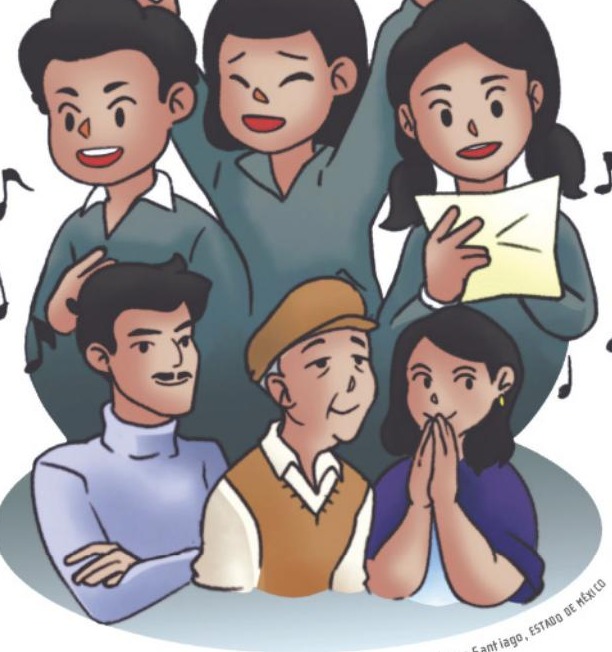
Producto: Class songbook with individually authored songs
Instrumento de evaluación de contenidos, PDA y producto del proyecto:
| Criterios de evaluación | Logrado | En proceso | Falta por consolidar |
|---|---|---|---|
| Each student writes their first and last names legibly on their original song to identify authorship | |||
| Each song includes a title and communicates an experience or emotion through its lyrics | |||
| Each student uses peer and teacher feedback to revise the song while retaining clear author identification | |||
| The class songbook includes the students’ contributions arranged and assembled according to the agreed plan | |||
| Students participate respectfully in presenting the songbook and reflect on how names indicate authorship and belonging |
Antes de descargar
Datos, propósito y contenidos
- Students will create and revise an original song that communicates personal experiences and emotions, then contribute it to a c?
- Writing names in the mother tongue.
Actividades, producto y evaluación
- Notebook, Official textbook, pp. 94–96, Board and markers, Notebook, Official textbook, pp. 97–98, Board and markers, Notebook,?
- Class songbook with individually authored songs
Tu material está listo para descargar
Elige Word, PDF o anexos desde un solo lugar.
Mira lo que los maestros ya crearon con Gamificación Educativa
Preguntas frecuentes sobre esta planeación
¿Para qué grado y semanas está diseñada esta planeación?
Está diseñada para segundo grado, la semana 12 de noviembre de 2026, dentro del ciclo escolar 2026–2027.
¿Qué metodología utiliza la planeación?
La secuencia utiliza project-based learning, following the planning, creation, revision, compilation, presentation, and reflection sequence of the official classroom project. y organiza actividades situadas con evidencias y un producto final.
¿La planeación incluye contenidos y PDA de la NEM?
Sí. Incluye el campo formativo, el contenido, el proceso de desarrollo de aprendizaje, actividades y evaluación formativa alineados con la NEM.
¿Puedo editar y adaptar el archivo?
Sí. La versión Word es editable para ajustar actividades, materiales, apoyos, tiempos y evidencias. El PDF está listo para imprimir.
