
Planeación didáctica por proyectos de tercer grado — Semana 13 de diciembre 2026: ¿Cómo hacemos ladrillos con residuos?
 ChannelKids

Tu planeación, en un vistazo
Una ruta clara para llevar el proyecto «¿Cómo hacemos ladrillos con residuos?» al aula y adaptarlo a las necesidades de tu grupo.
Ver contexto pedagógico, adaptaciones y materiales
Esta planeación didáctica por proyectos está pensada para tercer grado, Fase 4, durante la semana 13 de diciembre del ciclo escolar 2026–2027. El proyecto «¿Cómo hacemos ladrillos con residuos?» tiene como propósito students will use spoken, written, and creative expression to document and explain the classroom investigation into making eco-bricks from waste. They will recognize how a narrative recounts past and present events and communicate the steps, difficulties, and learning involved in the project. La secuencia parte del contexto del grupo para convertir sus experiencias, preguntas y saberes previos en oportunidades de aprendizaje significativo.
La propuesta se desarrolla mediante inquiry-based learning with a steam approach, organized around the textbook project and its classroom-based investigation. y articula principalmente el campo formativo los campos formativos de la Nueva Escuela Mexicana. El contenido central aborda narration of past and present events. Los PDA describen estos aprendizajes: identifies and understands the function and main characteristics of a narrative by recognizing how a recount presents events in sequence, describes experiences, and communicates difficulties and solutions. Writes and shares a narrative about the classroom eco-brick project, organizing the events in a clear sequence and using details from the investigation and construction process. Las actividades se distribuyen por día con momentos de inicio, desarrollo y cierre, de modo que el docente pueda observar avances, recuperar producciones y ajustar la intervención sin perder el sentido del proyecto.
El producto final será illustrated narrative recount of the classroom eco-brick investigation. La evaluación es formativa y considera participación, procesos, producciones y reflexión del alumnado. Se sugieren recursos como notebook, Textbook, page 167, Notebook, Textbook, page 168, Clean transparent plastic bottles of the same size, if available, Fruit and vegetable scraps, a clean food wrapper, and recycled paper, if available, Notebook, Textbook, page 169, Classroom reference book or supervised digital source, Observation bottles from the previous session, if available, Notebook, Textbook, pages 170 and 172, Clean, dry non-recyclable inorganic waste, if available, Clean plastic bottle, if available, Notebook, Textbook, pages 173 and 180, Drawing paper or notebook paper, Pencils and colored pencils. Para atender distintos ritmos de aprendizaje, ofrece apoyos visuales, consignas breves, opciones de respuesta oral o gráfica y acompañamiento entre pares. El documento puede descargarse en Word editable o en PDF listo para imprimir. Ambas versiones permiten adecuar tiempos, materiales, lenguaje, apoyos y evidencias a las necesidades reales de cada escuela.
Ficha curricular de la planeación
Consulta primero los elementos de la NEM. Después encontrarás la secuencia completa organizada por día.
Datos generales y propósito del proyecto
Ciclo escolar 2026–2027 · Fase 4.
Propósito: Students will use spoken, written, and creative expression to document and explain the classroom investigation into making eco-bricks from waste. They will recognize how a narrative recounts past and present events and communicate the steps, difficulties, and learning involved in the project.
Metodología: Inquiry-based learning with a STEAM approach, organized around the textbook project and its classroom-based investigation.
Contenido
Narration of past and present events.
Proceso de Desarrollo de Aprendizaje (PDA)
Identifies and understands the function and main characteristics of a narrative by recognizing how a recount presents events in sequence, describes experiences, and communicates difficulties and solutions. Writes and shares a narrative about the classroom eco-brick project, organizing the events in a clear sequence and using details from the investigation and construction process.
Ejes articuladores oficiales
Inclusión, Pensamiento crítico
Producto final
Illustrated narrative recount of the classroom eco-brick investigation.
Evaluación formativa
Ver criterios y evidencias
The student identifies that a narrative recounts events and recognizes its main features, including sequence and relevant details. The written account presents the classroom investigation in a logical chronological order. The narrative describes at least one difficulty encountered and explains how the group addressed it, using evidence recorded during the project. The student communicates ideas orally with understandable wording and listens attentively during a peer’s recount. The illustration and written account correspond to the documented eco-brick investigation and its classroom context.
Materiales
Ver lista completa
Notebook, Textbook, page 167, Notebook, Textbook, page 168, Clean transparent plastic bottles of the same size, if available, Fruit and vegetable scraps, a clean food wrapper, and recycled paper, if available, Notebook, Textbook, page 169, Classroom reference book or supervised digital source, Observation bottles from the previous session, if available, Notebook, Textbook, pages 170 and 172, Clean, dry non-recyclable inorganic waste, if available, Clean plastic bottle, if available, Notebook, Textbook, pages 173 and 180, Drawing paper or notebook paper, Pencils and colored pencils
Adaptaciones para el grupo
Para atender distintos ritmos de aprendizaje, ofrece apoyos visuales, consignas breves, opciones de respuesta oral o gráfica y acompañamiento entre pares.
Desarrollo completo de la planeación
Aquí comienza la organización diaria con inicio, desarrollo, cierre, recursos y evidencias. El contenido y el PDA ya están separados en la ficha anterior.
¿Cómo hacemos ladrillos con residuos?
Semana: Semana 13 — Diciembre
Languages
Metodología: Inquiry-based learning with a STEAM approach, organized around the textbook project and its classroom-based investigation.
Propósito: Students will use spoken, written, and creative expression to document and explain the classroom investigation into making eco-bricks from waste. They will recognize how a narrative recounts past and present events and communicate the steps, difficulties, and learning involved in the project.
Ejes articuladores
- Inclusión
- Pensamiento crítico
| Campo formativo | Contenido | PDA |
|---|---|---|
| Languages | Narration of past and present events. | Identifies and understands the function and main characteristics of a narrative by recognizing how a recount presents events in sequence, describes experiences, and communicates difficulties and solutions. Writes and shares a narrative about the classroom eco-brick project, organizing the events in a clear sequence and using details from the investigation and construction process. |
| Día | Secuencia de actividades | Recursos |
|---|---|---|
Monday | Introduce the project by asking students what kinds of waste they notice in their classroom and how those materials might become part of an eco-brick. Invite them to explain their ideas aloud, then read the project questions and the planning instructions on page 167. Guide small groups to agree on how they will answer the questions, where they will look for information, and which materials they will need; have them record these agreements in their notebooks. Explain that these notes will preserve the first events of their project and can later support a narrative recount. Close by listening to each group’s explanation and checking whether students distinguish an initial idea from an observed fact and communicate their agreements clearly. | Notebook, Textbook, page 167 |
Tuesday | Use the classroom’s everyday waste as the starting point for a careful account of what students can observe. Following the investigation on page 168, have groups identify the waste materials represented in the book, record their characteristics, and discuss how the materials are alike or different; keep the work within the classroom rather than organizing a school-wide collection. Guide students through the book’s comparison of fruit and vegetable scraps, a food wrapper, and recycled paper, and have them describe what each material looks like before the bottles are observed. Ask partners to rehearse a short oral account using time words such as “first” and “then,” and conclude by checking that their notebook entries distinguish observation from opinion and contain details that could help a reader follow the investigation. | Notebook, Textbook, page 168, Clean transparent plastic bottles of the same size, if available, Fruit and vegetable scraps, a clean food wrapper, and recycled paper, if available |
Wednesday | Invite students to become evidence-based storytellers by returning to the materials and recording how they change over time. Use the five-day observation scheme on page 169 to help each group create or complete its dated record, describing the contents of each bottle and noting visible changes without assuming that all materials behave alike. Read the investigation prompt about waste that can be reused or transformed, then support students in consulting an age-appropriate book or supervised digital source available in the classroom and recording one relevant finding. Have students share one observation and one researched fact aloud; assess whether they use specific details, keep events in chronological order, and make clear which statements come from observation and which come from information they consulted. | Notebook, Textbook, page 169, Classroom reference book or supervised digital source, Observation bottles from the previous session, if available |
Thursday | Present the challenge of explaining how suitable waste can be prepared for an eco-brick, and ask students to predict which materials might be difficult to fold or compact. Develop the investigation from pages 170 and 172 by guiding groups to use their recorded evidence and the book’s prompts to discuss which waste is appropriate, how wrappers or similar materials can be folded, and what difficulties arise when attempting to fit them into a plastic bottle. Keep any handling of materials safe and supervised, and have students write brief notes describing the attempt, the obstacle, and the proposed response. Conclude with a partner retelling in which listeners check whether the account includes a clear sequence and names the difficulty and solution rather than merely listing materials. | Notebook, Textbook, pages 170 and 172, Clean, dry non-recyclable inorganic waste, if available, Clean plastic bottle, if available |
Friday | Turn the week’s investigation into a narrative that another reader can understand. Revisit the construction and reflection guidance on pages 173 and 180, and ask each student to draw the eco-brick made with classmates, then write a story describing how the group prepared and compacted its materials, what difficulties occurred, and how those difficulties were addressed; if no bottle was constructed, students should narrate the documented investigation and clearly state what they observed. Organize a respectful exchange in which partners listen to one another’s stories and identify the sequence of events and the details that make the account understandable. Finish by inviting students to record the group’s agreements about reusing non-recyclable inorganic waste, as directed on page 180, and assess clarity, chronological organization, relevant details, and attentive oral sharing. | Notebook, Textbook, pages 173 and 180, Drawing paper or notebook paper, Pencils and colored pencils |
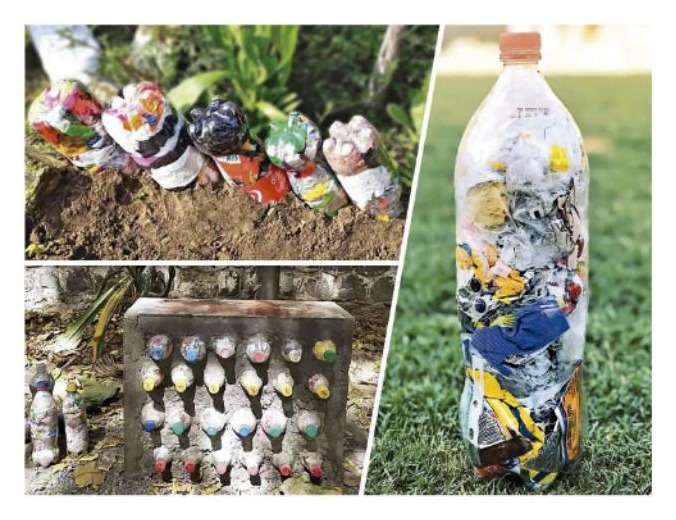
Producto: Illustrated narrative recount of the classroom eco-brick investigation.
Instrumento de evaluación de contenidos, PDA y producto del proyecto:
| Criterios de evaluación | Logrado | En proceso | Falta por consolidar |
|---|---|---|---|
| The student identifies that a narrative recounts events and recognizes its main features, including sequence and relevant details | |||
| The written account presents the classroom investigation in a logical chronological order | |||
| The narrative describes at least one difficulty encountered and explains how the group addressed it, using evidence recorded during the project | |||
| The student communicates ideas orally with understandable wording and listens attentively during a peer’s recount | |||
| The illustration and written account correspond to the documented eco-brick investigation and its classroom context |
Antes de descargar
Datos, propósito y contenidos
- Students will use spoken, written, and creative expression to document and explain the classroom investigation into making eco-?
- Narration of past and present events.
Actividades, producto y evaluación
- Notebook, Textbook, page 167, Notebook, Textbook, page 168, Clean transparent plastic bottles of the same size, if available, F?
- Illustrated narrative recount of the classroom eco-brick investigation.
Tu material está listo para descargar
Elige Word, PDF o anexos desde un solo lugar.
Mira lo que los maestros ya crearon con Gamificación Educativa
Preguntas frecuentes sobre esta planeación
¿Para qué grado y semanas está diseñada esta planeación?
Está diseñada para tercer grado, la semana 13 de diciembre de 2026, dentro del ciclo escolar 2026–2027.
¿Qué metodología utiliza la planeación?
La secuencia utiliza inquiry-based learning with a steam approach, organized around the textbook project and its classroom-based investigation. y organiza actividades situadas con evidencias y un producto final.
¿La planeación incluye contenidos y PDA de la NEM?
Sí. Incluye el campo formativo, el contenido, el proceso de desarrollo de aprendizaje, actividades y evaluación formativa alineados con la NEM.
¿Puedo editar y adaptar el archivo?
Sí. La versión Word es editable para ajustar actividades, materiales, apoyos, tiempos y evidencias. El PDF está listo para imprimir.
