
Planeación didáctica por proyectos de tercer grado — Semana 9 de noviembre 2026: ¿Cómo conservar nuestros alimentos?
 ChannelKids
Mira lo que los maestros ya crearon con Hoja de Trabajo Infantil

Tu planeación, en un vistazo
Una ruta clara para llevar el proyecto «¿Cómo conservar nuestros alimentos?» al aula y adaptarlo a las necesidades de tu grupo.
Ver contexto pedagógico, adaptaciones y materiales
Esta planeación didáctica por proyectos está pensada para tercer grado, Fase 4, durante la semana 9 de noviembre del ciclo escolar 2026–2027. El proyecto «¿Cómo conservar nuestros alimentos?» tiene como propósito students will identify the purpose and main features of narratives by interpreting and retelling the account of Samon's fruit water and the classroom inquiry into food preservation. They will strengthen oral, written, and creative expression by recording observations, explaining events in sequence, and presenting the construction and use of a homemade refrigerator. La secuencia parte del contexto del grupo para convertir sus experiencias, preguntas y saberes previos en oportunidades de aprendizaje significativo.
La propuesta se desarrolla mediante inquiry-based learning with a steam approach, following the textbook project sequence. y articula principalmente el campo formativo los campos formativos de la Nueva Escuela Mexicana. El contenido central aborda narration of past and present events. Los PDA describen estos aprendizajes: students identify the purpose and main characteristics of a narrative by examining the account of Samon's fruit water and distinguishing the events, characters, setting, and sequence. Students narrate past and present events orally and in writing, using observations from the textbook investigations to explain changes in water, mixtures, and the homemade refrigerator. Las actividades se distribuyen por día con momentos de inicio, desarrollo y cierre, de modo que el docente pueda observar avances, recuperar producciones y ajustar la intervención sin perder el sentido del proyecto.
El producto final será illustrated chronological account of the classroom inquiry and homemade refrigerator. La evaluación es formativa y considera participación, procesos, producciones y reflexión del alumnado. Se sugieren recursos como student notebook, Textbook, pages 124–125, Student notebook, Plastic bottle with cap, prepared and handled by the teacher, Permanent marker or label, Ruler, Cloth, Textbook, pages 126–128, Student notebook, Prepared water bottle, Ruler, Textbook, pages 129–131, Student notebook, Small capped plastic containers, Water, sugar, sand or soil, fruit, alcohol, and oil as specified in the textbook, Syringe without a needle, Labels or permanent marker, Textbook, pages 132–135, Student notebook, Pencils and colored pencils, Textbook, pages 142–145. Para atender distintos ritmos de aprendizaje, ofrece apoyos visuales, consignas breves, opciones de respuesta oral o gráfica y acompañamiento entre pares. El documento puede descargarse en Word editable o en PDF listo para imprimir. Ambas versiones permiten adecuar tiempos, materiales, lenguaje, apoyos y evidencias a las necesidades reales de cada escuela.
Ficha curricular de la planeación
Consulta primero los elementos de la NEM. Después encontrarás la secuencia completa organizada por día.
Datos generales y propósito del proyecto
Ciclo escolar 2026–2027 · Fase 4.
Propósito: Students will identify the purpose and main features of narratives by interpreting and retelling the account of Samon's fruit water and the classroom inquiry into food preservation. They will strengthen oral, written, and creative expression by recording observations, explaining events in sequence, and presenting the construction and use of a homemade refrigerator.
Metodología: Inquiry-based learning with a STEAM approach, following the textbook project sequence.
Contenido
Narration of past and present events.
Proceso de Desarrollo de Aprendizaje (PDA)
Students identify the purpose and main characteristics of a narrative by examining the account of Samon's fruit water and distinguishing the events, characters, setting, and sequence. Students narrate past and present events orally and in writing, using observations from the textbook investigations to explain changes in water, mixtures, and the homemade refrigerator.
Ejes articuladores oficiales
Inclusión, Pensamiento crítico
Producto final
Illustrated chronological account of the classroom inquiry and homemade refrigerator.
Evaluacion formativa
Ver criterios y evidencias
The student identifies the characters, setting, central events, and sequence in the account of Samon's fruit water. The student writes a coherent chronological narrative using observations recorded during the textbook investigations. The student distinguishes observed evidence from predictions or explanations when describing changes in water and mixtures. The student orally explains the refrigerator construction and intended use in a clear, ordered manner. The student revises the written account to improve completeness, sentence clarity, and accurate use of project vocabulary.
Materiales
Ver lista completa
Student notebook, Textbook, pages 124–125, Student notebook, Plastic bottle with cap, prepared and handled by the teacher, Permanent marker or label, Ruler, Cloth, Textbook, pages 126–128, Student notebook, Prepared water bottle, Ruler, Textbook, pages 129–131, Student notebook, Small capped plastic containers, Water, sugar, sand or soil, fruit, alcohol, and oil as specified in the textbook, Syringe without a needle, Labels or permanent marker, Textbook, pages 132–135, Student notebook, Pencils and colored pencils, Textbook, pages 142–145
Adaptaciones para el grupo
Para atender distintos ritmos de aprendizaje, ofrece apoyos visuales, consignas breves, opciones de respuesta oral o gráfica y acompañamiento entre pares.
Desarrollo completo de la planeación
Aquí comienza la organización diaria con inicio, desarrollo, cierre, recursos y evidencias. El contenido y el PDA ya están separados en la ficha anterior.
¿Cómo conservar nuestros alimentos?
Semana: Semana 9 — Noviembre
Languages
Metodología: Inquiry-based learning with a STEAM approach, following the textbook project sequence.
Propósito: Students will identify the purpose and main features of narratives by interpreting and retelling the account of Samon's fruit water and the classroom inquiry into food preservation. They will strengthen oral, written, and creative expression by recording observations, explaining events in sequence, and presenting the construction and use of a homemade refrigerator.
Ejes articuladores
- Inclusión
- Pensamiento crítico
| Campo formativo | Contenido | PDA |
|---|---|---|
| Languages | Narration of past and present events. | Students identify the purpose and main characteristics of a narrative by examining the account of Samon's fruit water and distinguishing the events, characters, setting, and sequence. Students narrate past and present events orally and in writing, using observations from the textbook investigations to explain changes in water, mixtures, and the homemade refrigerator. |
| Día | Secuencia de actividades | Recursos |
|---|---|---|
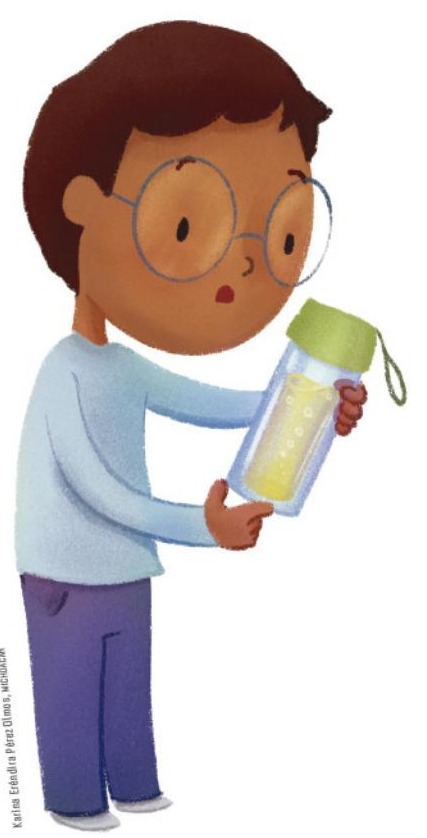
| Monday | Present the classroom problem through the account of Samon, whose fruit water developed bubbles and an unusual taste, and invite students to listen for who was involved, where the event occurred, and what happened first, next, and last. Organize a respectful read-aloud using the textbook account, then ask students to record their explanations for the bubbles and suggest how Samon might avoid a similar experience, as directed on pages 124–125. Guide a brief oral exchange in which students support their ideas with details from the narrative rather than guesses alone. Close by having each student write a short retelling of the event and underline words that show sequence; assess whether the retelling preserves the central events and communicates them clearly. | Student notebook, Textbook, pages 124–125 |
| Tuesday | Invite students to revisit the question of what might happen if Samon's water had contained no fruit, then frame the textbook bottle investigation as evidence for extending the narrative beyond its opening event. Using the instructions on pages 126–128, have small groups describe how the bottle feels and looks before freezing, mark the water level, and record what they expect to observe after the water freezes; keep the work within the classroom and use teacher-managed preparation for the overnight freezing step. Ask each group to write a dated observation entry that distinguishes what they observed from what they predict, and to explain how the sequence of events could be narrated to another reader. Conclude with brief oral reports, checking precise vocabulary, logical order, and clear sentences. | Student notebook, Plastic bottle with cap, prepared and handled by the teacher, Permanent marker or label, Ruler, Cloth, Textbook, pages 126–128 |
| Wednesday | Use the students’ recorded water-level marks to prompt a comparison between the frozen bottle and the earlier observation, then direct groups to describe the evidence in a connected account of what changed and when. Follow the textbook sequence on pages 129–131 by measuring from the bottle’s base to the marked levels, noting whether the container feels rigid or soft, and recording observations after the prescribed warm exposure; the teacher should supervise all handling and ensure the bottle remains in the classroom. Have students compose a short chronological paragraph with time expressions and details from their records, then invite partners to read it aloud and identify any missing event or unclear reference. Assess the accuracy of the sequence and the students’ ability to distinguish observed facts from explanations. | Student notebook, Prepared water bottle, Ruler, Textbook, pages 129–131 |
| Thursday | Set out the textbook’s question about what happens when water mixes with other materials and ask students to predict how the observations could become part of a factual narrative. Guide small groups through the materials and procedures on pages 132–135: label the containers, describe the starting substances, prepare the specified mixtures, and record their appearance and consistency before and after the resting period and warm exposure. The teacher must supervise materials, prevent tasting or close smelling, and manage any substances requiring special care. Students then draft a brief laboratory account that states the purpose, describes the sequence, and reports evidence without changing the textbook procedure. Close with peer reading focused on event order, complete sentences, and whether each claim matches the recorded observations. | Student notebook, Small capped plastic containers, Water, sugar, sand or soil, fruit, alcohol, and oil as specified in the textbook, Syringe without a needle, Labels or permanent marker, Textbook, pages 132–135 |
| Friday | Ask students to connect their investigation records with the project’s final account of how the homemade refrigerator was constructed and how it may help preserve food and drinks. Review the textbook’s construction and reflection sequence on pages 142–145, then use the prompts on page 145 to support a classroom retelling that names the materials, explains the construction in order, and describes the intended use; any construction involving tools or adult assistance must be teacher-managed, and the class may work from the documented textbook process if a build is not feasible in the classroom. Students draw the refrigerator in their notebooks and add a concise explanatory narrative, then share it orally with classmates. Close by inviting students to identify one difficulty and one possible improvement, assessing narrative organization, clarity of speech, and use of evidence from the project. | Student notebook, Pencils and colored pencils, Textbook, pages 142–145 |
Producto: Illustrated chronological account of the classroom inquiry and homemade refrigerator.
Instrumento de evaluación de contenidos, PDA y producto del proyecto:
| Criterios de evaluación | Logrado | En proceso | Falta por consolidar |
|---|---|---|---|
| The student identifies the characters, setting, central events, and sequence in the account of Samon's fruit water | |||
| The student writes a coherent chronological narrative using observations recorded during the textbook investigations | |||
| The student distinguishes observed evidence from predictions or explanations when describing changes in water and mixtures | |||
| The student orally explains the refrigerator construction and intended use in a clear, ordered manner | |||
| The student revises the written account to improve completeness, sentence clarity, and accurate use of project vocabulary |
Antes de descargar
Datos, propósito y contenidos
- Students will identify the purpose and main features of narratives by interpreting and retelling the account of Samon's fr?
- Narration of past and present events.
Actividades, producto y evaluación
- Student notebook, Textbook, pages 124–125, Student notebook, Plastic bottle with cap, prepared and handled by the teacher, Perm?
- Illustrated chronological account of the classroom inquiry and homemade refrigerator.
Tu material está listo para descargar
Elige Word, PDF o anexos desde un solo lugar.
Mira lo que los maestros ya crearon con Hoja de Trabajo Infantil
Preguntas frecuentes sobre esta planeación
¿Para qué grado y semanas está diseñada esta planeación?
Está diseñada para tercer grado, la semana 9 de noviembre de 2026, dentro del ciclo escolar 2026–2027.
¿Qué metodología utiliza la planeación?
La secuencia utiliza inquiry-based learning with a steam approach, following the textbook project sequence. y organiza actividades situadas con evidencias y un producto final.
¿La planeación incluye contenidos y PDA de la NEM?
Sí. Incluye el campo formativo, el contenido, el proceso de desarrollo de aprendizaje, actividades y evaluación formativa alineados con la NEM.
¿Puedo editar y adaptar el archivo?
Sí. La versión Word es editable para ajustar actividades, materiales, apoyos, tiempos y evidencias. El PDF está listo para imprimir.
