
Planeación didáctica por proyectos de sexto grado — Semana 12 de noviembre 2026: Salud sexual y reproductiva
 ChannelKids
Mira lo que los maestros ya crearon con Gamificación Educativa

Tu planeación, en un vistazo
Una ruta clara para llevar el proyecto «Salud sexual y reproductiva» al aula y adaptarlo a las necesidades de tu grupo.
Ver contexto pedagógico, adaptaciones y materiales
Esta planeación didáctica por proyectos está pensada para sexto grado, Fase 5, durante la semana 12 de noviembre del ciclo escolar 2026–2027. El proyecto «Salud sexual y reproductiva» tiene como propósito students will interpret the adolescent diary entry and connect its past and present events through sequence, simultaneity, and duration. They will communicate informed conclusions about sexual and reproductive health through discussion, organized written responses, and a creative classroom product grounded in the textbook project. La secuencia parte del contexto del grupo para convertir sus experiencias, preguntas y saberes previos en oportunidades de aprendizaje significativo.
La propuesta se desarrolla mediante inquiry-based learning with a steam approach, using the textbook inquiry sequence to examine evidence, organize information, and communicate conclusions through oral, written, and creative expression. y articula principalmente el campo formativo los campos formativos de la Nueva Escuela Mexicana. El contenido central aborda narration of past and present events. Los PDA describen estos aprendizajes: students read the autobiographical diary entry and identify temporal relationships of sequence, simultaneity, and duration in the narrated events. Students use evidence from the diary entry and the project’s inquiry activities to communicate clear, respectful oral and written responses about sexual and reproductive health. Las actividades se distribuyen por día con momentos de inicio, desarrollo y cierre, de modo que el docente pueda observar avances, recuperar producciones y ajustar la intervención sin perder el sentido del proyecto.
El producto final será classroom inquiry learning record combining a diary-based timeline, written questions and evidence-based responses, and oral reflection. La evaluación es formativa y considera participación, procesos, producciones y reflexión del alumnado. Se sugieren recursos como student notebooks, Textbook, pp. 130–131, Pencils, Student notebooks, Textbook, p. 131, Pencils, Student notebooks, Textbook, p. 132, Pencils, Classroom board, Student notebooks, Textbook, pp. 133–134, Balloon, Measuring tape, Pencils, Student notebooks, Textbook, pp. 130–134, Loose-leaf paper, Pencils. Para atender distintos ritmos de aprendizaje, ofrece apoyos visuales, consignas breves, opciones de respuesta oral o gráfica y acompañamiento entre pares. El documento puede descargarse en Word editable o en PDF listo para imprimir. Ambas versiones permiten adecuar tiempos, materiales, lenguaje, apoyos y evidencias a las necesidades reales de cada escuela.
Ficha curricular de la planeación
Consulta primero los elementos de la NEM. Después encontrarás la secuencia completa organizada por día.
Datos generales y propósito del proyecto
Ciclo escolar 2026–2027 · Fase 5.
Propósito: Students will interpret the adolescent diary entry and connect its past and present events through sequence, simultaneity, and duration. They will communicate informed conclusions about sexual and reproductive health through discussion, organized written responses, and a creative classroom product grounded in the textbook project.
Metodología: Inquiry-based learning with a STEAM approach, using the textbook inquiry sequence to examine evidence, organize information, and communicate conclusions through oral, written, and creative expression.
Contenido
Narration of past and present events.
Proceso de Desarrollo de Aprendizaje (PDA)
Students read the autobiographical diary entry and identify temporal relationships of sequence, simultaneity, and duration in the narrated events. Students use evidence from the diary entry and the project’s inquiry activities to communicate clear, respectful oral and written responses about sexual and reproductive health.
Ejes articuladores oficiales
Inclusión, Pensamiento crítico
Producto final
Classroom inquiry learning record combining a diary-based timeline, written questions and evidence-based responses, and oral reflection.
Evaluacion formativa
Ver criterios y evidencias
Students identify sequence, simultaneity, and duration in the diary entry and support their interpretations with textual details. Students organize a written retelling or reflection so that its events and ideas are clear and logically connected. Students formulate relevant questions and communicate responses about the project topic using evidence from the textbook activities. Students participate in oral discussion with clear expression, respectful language, and attention to classmates’ contributions.
Materiales
Ver lista completa
Student notebooks, Textbook, pp. 130–131, Pencils, Student notebooks, Textbook, p. 131, Pencils, Student notebooks, Textbook, p. 132, Pencils, Classroom board, Student notebooks, Textbook, pp. 133–134, Balloon, Measuring tape, Pencils, Student notebooks, Textbook, pp. 130–134, Loose-leaf paper, Pencils
Adaptaciones para el grupo
Para atender distintos ritmos de aprendizaje, ofrece apoyos visuales, consignas breves, opciones de respuesta oral o gráfica y acompañamiento entre pares.
Desarrollo completo de la planeación
Aquí comienza la organización diaria con inicio, desarrollo, cierre, recursos y evidencias. El contenido y el PDA ya están separados en la ficha anterior.
Salud sexual y reproductiva
Semana: Semana 12 — Noviembre
Languages
Metodología: Inquiry-based learning with a STEAM approach, using the textbook inquiry sequence to examine evidence, organize information, and communicate conclusions through oral, written, and creative expression.
Propósito: Students will interpret the adolescent diary entry and connect its past and present events through sequence, simultaneity, and duration. They will communicate informed conclusions about sexual and reproductive health through discussion, organized written responses, and a creative classroom product grounded in the textbook project.
Ejes articuladores
- Inclusión
- Pensamiento crítico
| Campo formativo | Contenido | PDA |
|---|---|---|
| Languages | Narration of past and present events. | Students read the autobiographical diary entry and identify temporal relationships of sequence, simultaneity, and duration in the narrated events. Students use evidence from the diary entry and the project’s inquiry activities to communicate clear, respectful oral and written responses about sexual and reproductive health. |
| Día | Secuencia de actividades | Recursos |
|---|---|---|
| Monday | Present the project’s guiding questions by inviting students to consider what a young person might need to know about menstruation, genital hygiene, and the risks associated with unprotected sexual activity. Read the adolescent’s diary entry aloud with the class, then have students reread it individually and mark expressions that show when events happened, which events followed one another, and which details describe an ongoing situation. Use the entry’s account of the grandmother’s memories and the adolescent’s questions to distinguish past experience from present concerns without asking students to disclose personal information (pp. 130–131). Next, guide a respectful discussion and have students complete the textbook’s knowledge organizer about genital hygiene, sexual relationships, and adolescent pregnancy. Close by collecting brief written responses and checking whether students support their interpretations with details from the text. | Student notebooks, Textbook, pp. 130–131, Pencils |
| Tuesday | Invite students to reconstruct the diary entry as a timeline, using its references to the previous Sunday, the grandmother’s earlier adolescence, and the narrator’s questions about the future. Ask them to label relationships of sequence, simultaneity, and duration, then compare their choices with a partner and explain how particular words or phrases support each interpretation. Continue with the project’s three inquiry questions about adolescent pregnancy, sexually transmitted infections, and responsible sexuality; have small groups record the questions and agree on how to investigate them in the coming sessions (p. 131). To connect close reading with expressive writing, ask each student to write a short paragraph retelling one event from the diary while preserving its time relationships and respectful tone. Review the paragraphs for temporal clarity, readable sentences, and accurate use of evidence, then invite volunteers to read their work aloud. | Student notebooks, Textbook, p. 131, Pencils |
| Wednesday | Use the class’s inquiry questions to focus attention on how evidence can clarify the consequences of adolescent pregnancy. In groups, students examine the textbook survey prompts about age at the birth of a first child, physical or health difficulties, and life changes; they organize these prompts into a concise interview record and discuss how to ask them respectfully and protect privacy (p. 132). Keep the work within the classroom by having students analyze the questions and the textbook’s requested comparison scheme rather than requiring interviews beyond the classroom. Then ask each group to draft a short oral explanation of what the survey is designed to find out, using clear sequencing language to distinguish the information collected from the conclusions that may follow. Listen for precise wording, respectful expression, and a clear connection between evidence and the project question; close with peer feedback on whether the explanation is understandable and appropriately framed. | Student notebooks, Textbook, p. 132, Pencils, Classroom board |
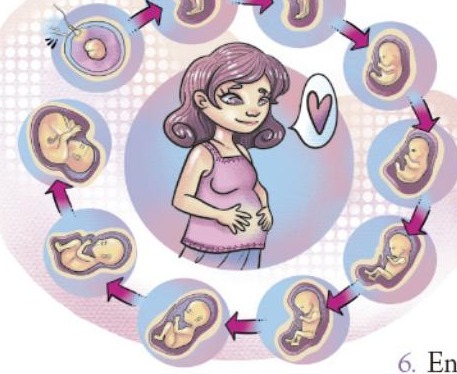
| Thursday | Begin by asking how a comparison of pregnancy-related changes can help explain the risks faced by a young pregnant person. Direct students to the textbook’s balloon-and-measuring activity and its table for recording pregnancy month, balloon measurement, fetus weight, and observations; examine the table and procedure together, then have groups identify what evidence the activity is intended to represent and what information must be researched from reliable sources with adult guidance (pp. 133–134). Keep any measurement or demonstration within the classroom and clarify that the model is illustrative, not a substitute for medical information. Students then compose four questions about early pregnancy, as the book directs, and write evidence-based answers using the material available to the class. Conclude with a group exchange in which students explain how the model, table, and written questions contribute to understanding, while the teacher checks accuracy, logical order, and oral clarity. | Student notebooks, Textbook, pp. 133–134, Balloon, Measuring tape, Pencils |
| Friday | Ask students to synthesize the week’s reading and inquiry by revisiting the diary’s questions and the project’s focus on informed, responsible decisions. Have them create a one-page classroom learning record that combines a short, time-ordered reflection on the diary entry with three carefully worded questions about sexual and reproductive health and concise answers supported by the project material. Invite students to share selected passages orally, then guide a respectful discussion about how clear communication and reliable information can challenge myths without stigmatizing anyone. As a final individual reflection, students identify one temporal relationship they recognized in the diary and explain how evidence helped them understand a project question. Assess the written record and oral sharing for temporal accuracy, organization, respectful language, and evidence-based reasoning; keep all sharing within the classroom (pp. 130–134). | Student notebooks, Textbook, pp. 130–134, Loose-leaf paper, Pencils |
Producto: Classroom inquiry learning record combining a diary-based timeline, written questions and evidence-based responses, and oral reflection.
Instrumento de evaluación de contenidos, PDA y producto del proyecto:
| Criterios de evaluación | Logrado | En proceso | Falta por consolidar |
|---|---|---|---|
| Students identify sequence, simultaneity, and duration in the diary entry and support their interpretations with textual details | |||
| Students organize a written retelling or reflection so that its events and ideas are clear and logically connected | |||
| Students formulate relevant questions and communicate responses about the project topic using evidence from the textbook activities | |||
| Students participate in oral discussion with clear expression, respectful language, and attention to classmates’ contributions |
Antes de descargar
Datos, propósito y contenidos
- Students will interpret the adolescent diary entry and connect its past and present events through sequence, simultaneity, and ?
- Narration of past and present events.
Actividades, producto y evaluación
- Student notebooks, Textbook, pp. 130–131, Pencils, Student notebooks, Textbook, p. 131, Pencils, Student notebooks, Textbook, p?
- Classroom inquiry learning record combining a diary-based timeline, written questions and evidence-based responses, and oral re?
Tu material está listo para descargar
Elige Word, PDF o anexos desde un solo lugar.
Mira lo que los maestros ya crearon con Gamificación Educativa
Preguntas frecuentes sobre esta planeación
¿Para qué grado y semanas está diseñada esta planeación?
Está diseñada para sexto grado, la semana 12 de noviembre de 2026, dentro del ciclo escolar 2026–2027.
¿Qué metodología utiliza la planeación?
La secuencia utiliza inquiry-based learning with a steam approach, using the textbook inquiry sequence to examine evidence, organize information, and communicate conclusions through oral, written, and creative expression. y organiza actividades situadas con evidencias y un producto final.
¿La planeación incluye contenidos y PDA de la NEM?
Sí. Incluye el campo formativo, el contenido, el proceso de desarrollo de aprendizaje, actividades y evaluación formativa alineados con la NEM.
¿Puedo editar y adaptar el archivo?
Sí. La versión Word es editable para ajustar actividades, materiales, apoyos, tiempos y evidencias. El PDF está listo para imprimir.
